

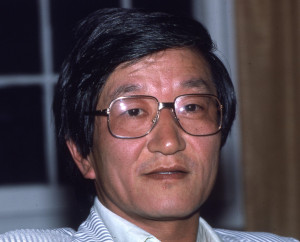
Mannque Rho, a distinguished member of the Institut de Physique Théorique at CEA Saclay (France), passed away on 19 March 2026 at the age of 89.
Born on 14 December 1936 in Hamyang, Gyeongnam Province, Republic of Korea, the eldest of eight children, Rho graduated from Kyunggi High School and began his university studies in political science at Seoul National University before moving to the United States. He completed his undergraduate education at Clark University (Bachelor of Arts in chemistry, 1960), and subsequently entered the doctoral program at the University of California Berkeley, where he obtained his PhD on 21 October 1963.
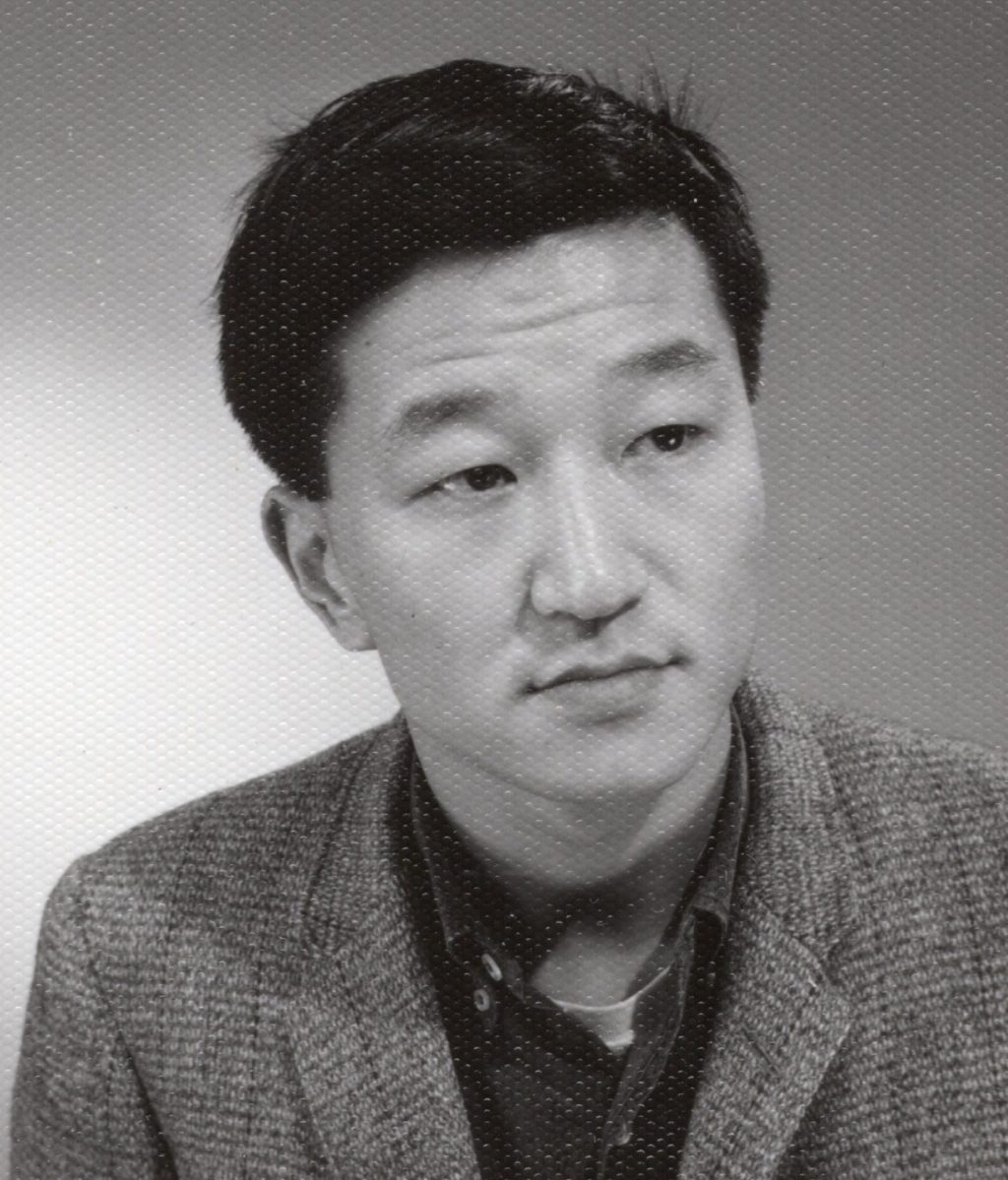
During his time in Berkeley, Rho met Vincent Gillet, who invited him to take up a postdoctoral position at the Service de Physique Théorique (SPhT), the predecessor of IPhT, at CEA Saclay. In 1964, supported by a one-year Joliot-Curie fellowship, he moved to France to work at the SPhT and the Laboratoire Joliot-Curie in Orsay.  At the SPhT, he interacted with Gillet and the young team of theoretical nuclear physicists led by Claude Bloch, the head of SPhT. He became a permanent member of SPhT on the 1 June 1965. He made this institute his intellectual home for his whole life, and over the years, he collaborated there with Vincent Gillet, Bertrand Giraud, Marc Chemtob, Jean-Paul Blaizot  and  Madeleine Soyeur.

Mannque Rho was a world-renowned theoretical nuclear physicist, working at the forefront of important developments in nuclear and hadronic physics. His work spanned chiral symmetry in nuclear media, effective field theories, and topological approaches to strongly interacting matter. His research addressed fundamental questions at the interface of nuclear physics, particle physics, and astrophysics.

In the early seventies, he initiated a long lasting collaboration with Gerald E. Brown at Stony Brook University. Together, in 1979, they developed the “little bag” model, providing a conceptual bridge between quark degrees of freedom and the pion cloud surrounding nucleons. This work offered a new perspective on the relationship between fundamental and effective descriptions of nuclear structure.

He is particularly known for the Brown–Rho scaling (1991), which describes the in-medium modification of hadron masses in hot and/or dense matter. This influential idea has motivated many subsequent studies and has played a central role in shaping modern approaches to dense nuclear matter, with important implications for heavy-ion collisions and the physics of neutron stars.

Beyond these seminal contributions, he made major advances in constructing effective field theories rooted in Quantum Chromodynamics, enabling systematic connections between fundamental interactions and nuclear phenomena. His work on Skyrmion matter and hidden local symmetries revealed deep links between topology and the structure of dense baryonic matter.

Over the course of his career, Rho published more than 200 scientific articles, which have received over 11,000 citations. He authored the trilogy Chiral Nuclear Dynamics I (with M. A. Nowak and Ismail Zahed), II, and III (with Y.-L. Ma), and edited various volumes of collected works.

He held visiting positions at numerous leading institutions worldwide, including CERN, Stony Brook University, Hanyang University, the University of Virginia, the University of Tokyo (as a JSPS Professor), Seoul National University, Yonsei University, and Jilin University in Changchun, China. He also served as professor at the Korea Institute for Advanced Study and as chair professor at Hanyang University.

Rho’s scientific achievements were recognized by numerous honors, including the Paul Langevin Prize (1985), the Gay-Lussac–Humboldt Prize (1995), the Korean National Academy of Science Award (1999), and the Ho-Am Prize (2002). He received the Order of Civil Merit (Seokryu/Peony Medal) in 1997, was awarded an honorary Doctor of Science degree by Clark University in 2003, and received the KBS Overseas Korean Award in 2004. He was a member of the Korean Academy of Science and Technology.

He remained scientifically active into his final years, posting a work on the structure of superdense baryonic matter as recently as November 2025.

His personality blended kindness and modesty with a subtle sense of humor.

The Institut de Physique Théorique deeply regrets the loss of Mannque Rho, whose legacy will endure in the field of theoretical nuclear physics. We extend our sincere condolences to his family, colleagues, and students.